What Should You Keep in Your Car Emergency Kit? A San Fernando Valley Driver’s Guide
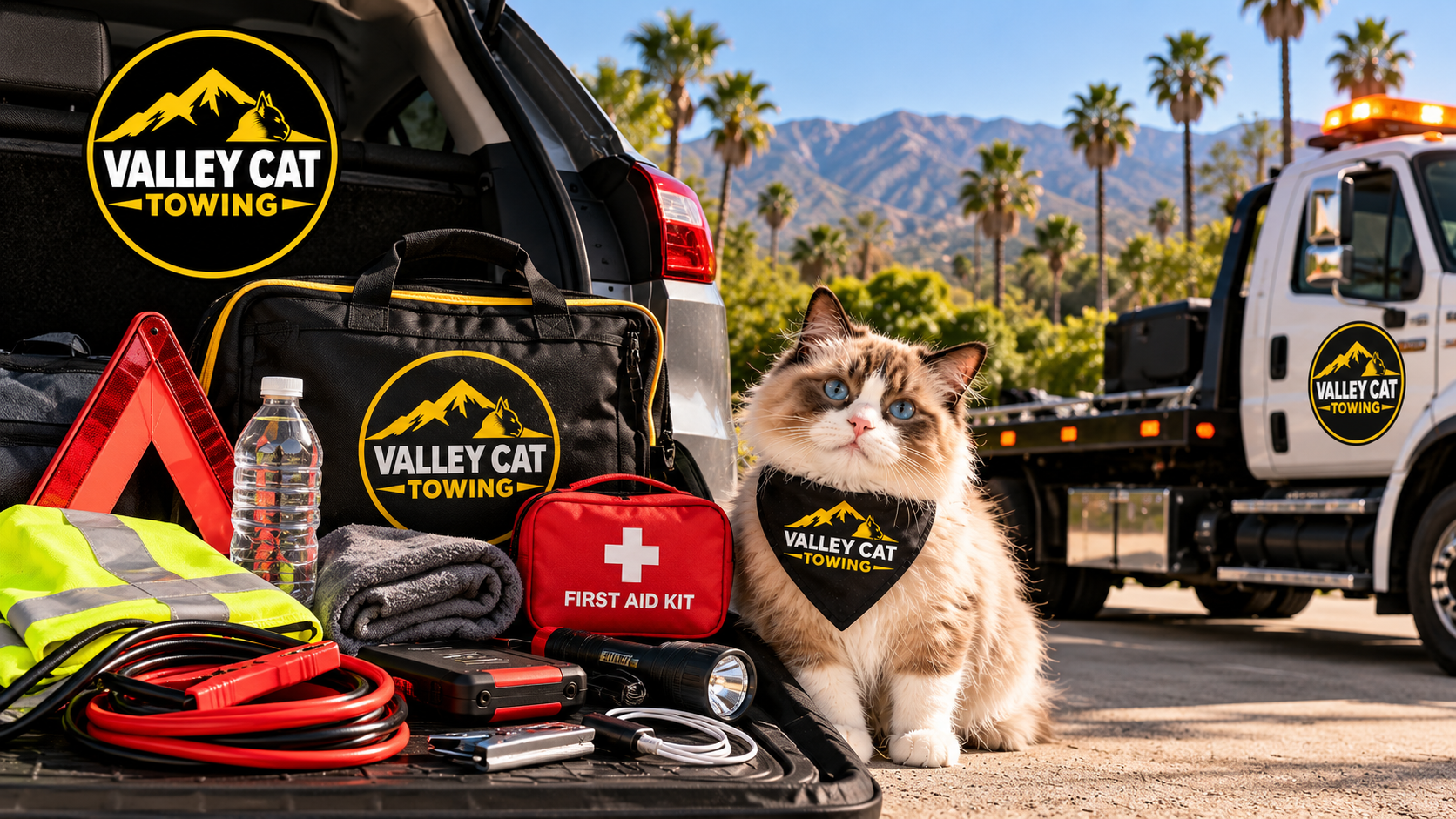
Nobody expects their car to break down.
You might be driving to work, running errands, or heading across the San Fernando Valley when suddenly you have a flat tire, a dead battery, or a mechanical problem that leaves you unable to keep driving.
While you can’t prevent every roadside problem, you can prepare for one.
Keeping a basic emergency kit in your vehicle can help you stay safer and more comfortable while you figure out what happened or wait for roadside assistance or a tow truck.
Here are some useful items San Fernando Valley drivers should consider keeping in their vehicles.
1. A Flashlight
Your phone probably has a flashlight, but during a roadside emergency, you may need to conserve your phone’s battery.
A separate flashlight can help you see around your vehicle after dark, find something inside your trunk, or make yourself more visible.
Check the batteries periodically so you know it will work when you need it.
2. A Phone Charger or Portable Power Bank
Your phone can become one of your most important tools when your vehicle breaks down.
You may need it to call for help, share your location, contact a repair shop, or let someone know that you’re going to be late.
Keep a charging cable that works with your vehicle in the car. A charged portable power bank can provide an additional backup, especially if your vehicle loses power.
3. Reflective Warning Gear
Visibility is especially important if your vehicle becomes disabled after dark or near moving traffic.
Consider keeping items such as a reflective safety vest or warning triangles in your emergency kit.
If you use warning equipment, never put yourself in danger trying to place it. If getting out of your vehicle would require you to walk near moving traffic or enter an unsafe area, prioritize your own safety.
4. Drinking Water
Anyone who has spent a summer in the San Fernando Valley knows how quickly temperatures can rise.
Keeping drinking water in your vehicle can make an unexpected wait much more manageable, particularly during warmer weather.
Check your emergency supplies periodically and replace anything that has been damaged, opened, or is no longer suitable for use.
5. A Basic First-Aid Kit
A compact first-aid kit is useful to have in your vehicle even when you're not dealing with a breakdown.
A basic kit might contain items such as bandages, gauze, antiseptic wipes, medical tape, and disposable gloves.
For serious injuries or medical emergencies, however, a first-aid kit isn't a substitute for professional medical care. Call 911 when emergency assistance is needed.
6. Jumper Cables or a Portable Jump Starter
A dead battery can leave you with a vehicle that suddenly won't start.
Traditional jumper cables can be useful when another vehicle is available to help. A portable jump starter provides another option and may allow a vehicle to be jump-started without connecting it to another car.
If you don't know why your vehicle won't start or aren't comfortable attempting a jump-start yourself, don't take unnecessary risks. Roadside assistance may be the better option.
7. A Blanket
Southern California may be known for its warm weather, but that doesn't mean every roadside wait will be comfortable.
Temperatures can drop after sunset, particularly during cooler months. Keeping a lightweight blanket in your trunk can help if you're stuck waiting for assistance.
It can also be useful during longer drives and other unexpected situations.
8. Basic Vehicle Information
Not everything in your emergency kit needs to be physical equipment.
Make sure you have access to important information about your vehicle and know basic details such as its year, make, and model.
When calling for towing or roadside assistance, you may also be asked:
Where you're located
What's wrong with the vehicle
Whether the vehicle can start
Whether it can roll, steer, or shift into neutral
Where you want the vehicle taken
Having this information ready can make the process easier.
What Should You Do If Your Car Breaks Down?
Your emergency kit can help you prepare, but what you do immediately after a breakdown matters too.
If your vehicle is still moving and you can safely get out of active traffic, move to a safer location and turn on your hazard lights.
Once stopped, pay attention to your surroundings before getting out of the vehicle. A busy freeway shoulder or heavily traveled road can be dangerous, and attempting to inspect or repair your car isn't worth putting yourself at risk.
If you're involved in a collision, someone is injured, or your vehicle is creating an immediate traffic hazard, contact emergency services when appropriate.
Once you're in a safer situation, you can determine whether you need roadside assistance or a tow.
When Should You Call a Tow Truck?
Some roadside problems have relatively simple solutions. Others mean the vehicle shouldn't be driven.
You may need a tow if your vehicle won't start, has been damaged, is overheating, has a serious mechanical problem, or otherwise can't be driven safely.
Trying to continue driving a vehicle with a serious problem could make the damage worse or leave you stranded somewhere less safe.
If you're unsure whether your vehicle can be driven, explain what's happening when you call for assistance.
A Little Preparation Can Make a Big Difference
Hopefully, most of the items in your emergency kit will spend their lives sitting unused in your trunk.
That's a good thing.
But if you ever find yourself stranded, having a flashlight, charged phone, water, visibility gear, and a few basic supplies can make an unexpected situation easier to handle while you wait for help.
And when the problem requires more than what's in your emergency kit, Valley Cat Towing is here to help drivers throughout the San Fernando Valley and surrounding areas.
Need towing or roadside assistance?
Valley Cat Towing
818-253-1546
valleycattowing.com
¡Hablamos español!